
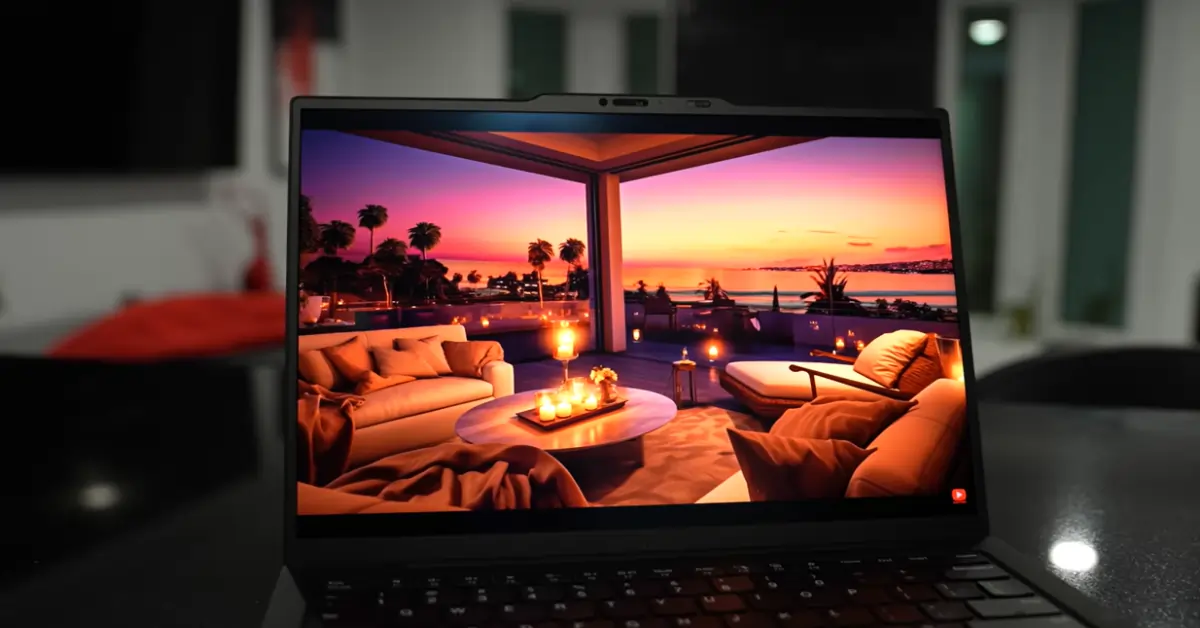
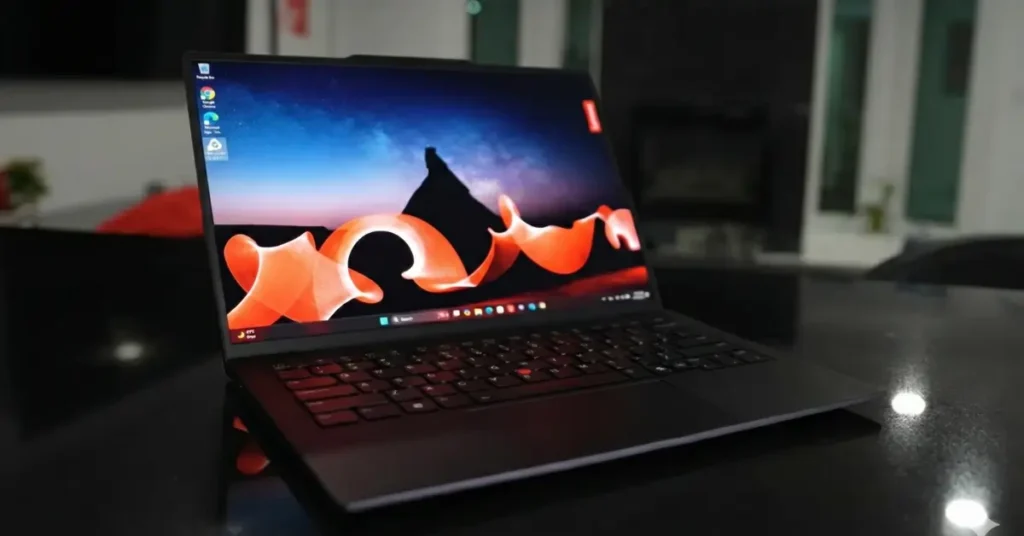
Lenovo is officially rolling out the Lenovo ThinkPad X1 Carbon Gen 14 (Aura Edition) and the ThinkPad X1 2-in-1 Gen 11 to stores this March 2026. Positioning these machines as the ultimate tools for enterprise power users, Lenovo is making a very aggressive play. They are targeting buyers who want uncompromised AI performance packed into a featherweight chassis.
If we look at the current market, this launch comes with a noticeable price hike. Last year’s Gen 13 model launched at a base price of $1,655. In India, that translated to roughly ₹1,59,471. Now, the new Gen 14 starts at a whopping $1,999, while the versatile 2-in-1 Gen 11 commands $2,149. Lenovo is clearly signalling that its flagship line is no longer just a high-end business laptop. It is a luxury productivity tool.
Back to the ThinkPad X1 models. Both the Carbon Gen 14 and the 2-in-1 Gen 11 share the same brilliant internal upgrades. Let’s break down exactly what you are paying for.
The Panther Lake Powerhouse
The biggest story here is the processor. Lenovo dropped the Intel Core Ultra Series 2 (Lunar Lake) chips used in the Gen 13. Instead, both the Gen 14 and the 2-in-1 Gen 11 are powered by the third-generation Intel Core Ultra X7 (Panther Lake).
Why does this matter? It comes down to the NPU (Neural Processing Unit). This new chip delivers up to 50 TOPS for advanced AI tasks. If you run heavy data models, compile massive codebases, or rely on local AI assistants, this processor handles it without breaking a sweat.
Memory and storage also get a massive bump. The Gen 13 capped out at 32GB of “on-package” memory, which frustrated users who needed more headroom. Lenovo listened. The new ThinkPad X1 Gen 14 models support up to a massive 64GB of LPDDR5x-9600 memory. You also get up to 2TB of PCIe Gen 5 SSD storage. Just keep in mind, Lenovo usually charges a massive premium for storage upgrades. Jumping from 512GB to 2TB historically adds around $700 to your cart.
The “Space Frame” Design
Heat is the enemy of thin laptops. Lenovo tackled this by introducing a new “Space Frame” interior for both models. This clever engineering increases thermal space to keep the Panther Lake chip cool. The best part? They kept the weight under 1 kg (2.2 lbs). You get desktop-level AI power in a machine you can hold with two fingers.
Display options remain top-tier. You can choose a stunning 14-inch 2.8K OLED panel with a fluid 120Hz refresh rate. If battery life is your top priority, you can opt for the IPS FHD panel pushing 500 nits of brightness. For remote workers, the webcam gets a massive upgrade. You now get a 10MP wide-FOV camera with Immervision technology. It makes standard 1080p webcams look ancient. Connectivity is also best-in-class, featuring three Thunderbolt 4 ports (up from two on the Gen 13), one USB-A 3.2 port, HDMI 2.1, and an audio jack.
Lenovo ThinkPad X1 Gen 14 vs. Galaxy Book6 Pro: Who Wins?
You cannot discuss premium ultraportables without looking at the competition. The Samsung Galaxy Book6 Pro is the obvious rival here.
| Feature | ThinkPad X1 Carbon Gen 14 | ThinkPad X1 Carbon Gen 13 |
|---|---|---|
| Processor & AI | Intel Core Ultra X7 (Panther Lake) with a 50 TOPS NPU | Intel Core Ultra Series 2 (Lunar Lake) |
| Memory (RAM) | Up to 64GB LPDDR5x (Upgradable options) | Up to 32GB LPDDR5x (Soldered “On-Package”) |
| Webcam | 10MP wide-FOV with Immervision tech | Standard 1080p / IR Camera |
| Connectivity | 3x Thunderbolt 4 ports | 2x Thunderbolt 4 ports |
| Base Pricing | Starts at $1,999 (Significant price hike) | Started at $1,655 |
Both laptops share some very similar DNA. They both offer 120Hz refresh rates on high-resolution panels. Samsung uses its famous AMOLED tech, while Lenovo sticks to OLED. Both provide deep blacks and fluid motion. They also both feature haptic touch trackpads and excellent backlit keyboards.
But does the new ThinkPad X1 actually beat Samsung on paper? For the business user, absolutely. Samsung gives you two Thunderbolt 4 ports. Lenovo gives you three. Samsung makes a great consumer laptop. Lenovo builds a boardroom survival tool. The 10MP wide-FOV camera on the Lenovo alone makes it the superior choice for endless virtual meetings.
ThinkPad X1 Gen 14 Key Specification
- Processor: Intel Core Ultra X7 (Panther Lake). ThinkPad X1 Gen 14 packs a massive 50 TOPS NPU. This handles heavy AI workloads locally without lagging.
- Memory: Up to 64GB LPDDR5x-9600. Forget the old 32GB limits. This gives you desktop-class multitasking.
- Storage: Up to 2TB PCIe Gen 5 SSD. Expect blistering fast read and write speeds for massive data files.
- Design & Weight: Lenovo built a new “Space Frame” interior. It vastly improves cooling while keeping both models incredibly light at under 1 kg (2.2 lbs).
- Display Options: You can choose a sharp 14-inch 2.8K OLED (120Hz) or a battery-saving IPS FHD panel (500 nits). The 2-in-1 Gen 11 obviously includes full touchscreen support for its 360-degree hinge.
- Camera: A massive upgrade to a 10MP wide-FOV camera with Immervision tech. Your virtual meetings will look incredibly sharp.
- Connectivity: Three Thunderbolt 4 ports, one USB-A 3.2, HDMI 2.1, and a standard audio jack. You will not need to carry a bag of dongles.
A $1,999 starting price means we will likely see these machines cross the ₹1.85 Lakh mark when fully available in India. The $2,149 starting price for the 2-in-1 Gen 11 pushes it even higher for those who want touchscreen flexibility.
If you only write emails and use Excel, this is overkill. You can save a lot of cash by picking up a discounted Gen 13 model right now. It is still incredibly thin at 986g and offers great battery life.
However, if you are a developer, a data scientist, or a high-level executive who demands zero lag during intense multitasking, this upgrade makes sense. The jump to 64GB RAM and the 50 TOPS NPU future-proofs your investment for years. If you want the absolute pinnacle of Windows productivity laptops, it is time to look at the new ThinkPad X1.