

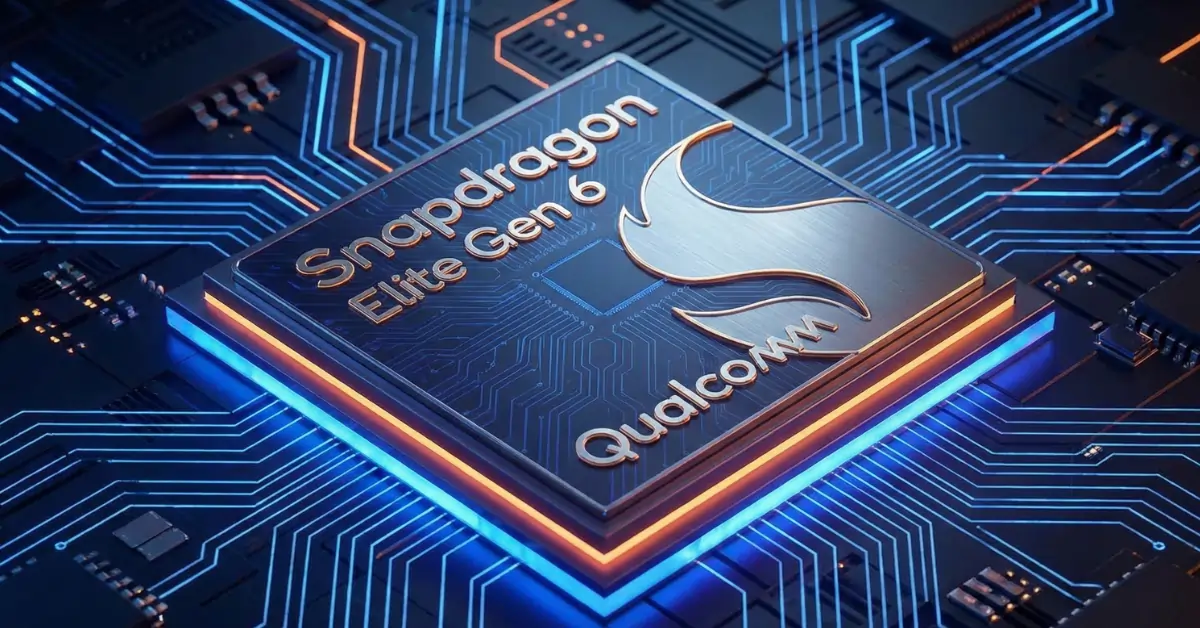
Qualcomm might be changing the rules of the game. Fresh leaks suggest the upcoming Snapdragon 8 Elite Gen 6 will not be a single chipset. Instead, we are looking at a split release. It seems the days of one “king” processor for all Android flagships are ending. Here is the deep dive on the SM8950 and SM8975.
The 2nm Revolution and the Cost of Power
The core of this report comes from the reliable Digital Chat Station. The leak points to a major shift in manufacturing. Both new processors will likely use TSMC’s N2P process. This is 2nm technology. It is incredibly efficient. It is also incredibly expensive.
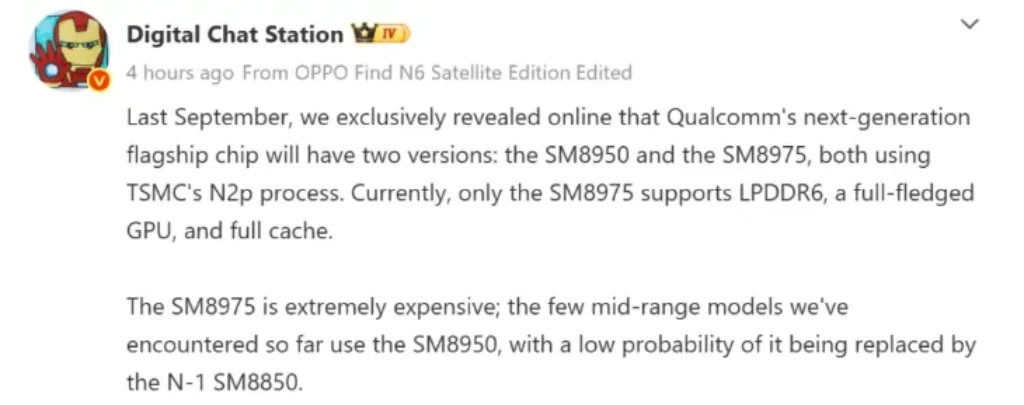
Estimates put the cost of these 2nm wafers at roughly $30,000 each. That is a massive bill for silicon. Qualcomm cannot just eat that cost. They also cannot pass all of it to the consumer without hurting sales. The solution? Create tiers. This strategy enables them to incorporate the Snapdragon 8 Elite Gen 6 into standard phones, while reserving the absolute best silicon for their most premium devices.
Snapdragon 8 Elite Gen 6 (SM8950): The “Standard” Flagship
The first chip carries the model number SM8950. This is the standard version. It is designed for the mainstream flagship market. Think of devices like the base Galaxy S27 or the standard Xiaomi 18.
This chip is all about balance. It uses the advanced N2P process for efficiency. However, it cuts corners on “extras” to keep the price down.
- Memory: It retains LPDDR5X support. It does not support the latest RAM standards.
- Storage: It likely sticks with UFS 4.0 speeds.
- GPU: The graphics unit may be cut down or have fewer cores active.
This is still a premium chip. But it is “capped.” It allows manufacturers to build high-end phones that don’t cost $1,500.
Snapdragon 8 Elite Gen 6 Pro (SM8975): The Unleashed Beast
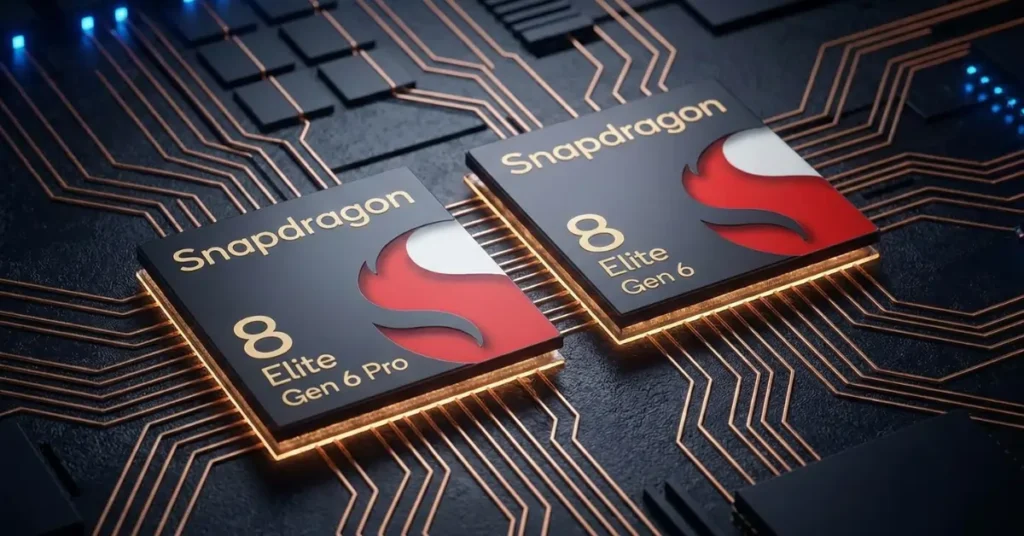
This is where things get exciting. The SM8975 is tentatively dubbed the “Snapdragon 8 Elite Gen 6 Pro.” This chip is for the power users. It is the engine for “Ultra” and “Pro Max” devices.
The “Pro” variant holds nothing back.
- Next-Gen RAM: It features exclusive support for LPDDR6 memory. This provides massive bandwidth improvements, which are critical for on-device AI tasks.
- Full GPU: It features a fully enabled GPU configuration. Every core is active.
- Cache: It has a larger, complete cache structure for faster data access.
Qualcomm is treating this like desktop PC parts. It is similar to how NVIDIA separates an RTX 4090 from an RTX 4080. You pay more, you get the full silicon.
The “N-1” Strategy and Release Timeline
The leak adds another layer of complexity. Some “middle-tier” flagships might skip the Snapdragon 8 Elite Gen 6 entirely. Manufacturers might opt for the SM8850 instead. That is the part number for the older Snapdragon 8 Elite Gen 5.
This creates a three-tier market:
- Old Flagship Tech: Gen 5 chips for affordable performance.
- Standard New Tech: The SM8950 for most buyers.
- Elite New Tech: The SM8975 Pro for enthusiasts.
We expect to see the official announcement in late 2026. The first devices running the Snapdragon 8 Elite Gen 6 series should hit shelves in Q4 2026 or early 2027.
Intaak Media Analysis: The End of the “One Chip” Era?
The Snapdragon 8 Elite Gen 6 leak signals the “PC-ification” of smartphones. For years, a flagship was a flagship. If you bought the Galaxy S23, you got the same chip as the S23 Ultra. That simplicity is gone.
This segmentation is annoying for consumers, but it is necessary for the industry. Wafer costs are skyrocketing. If Qualcomm forced the fully unlocked “Pro” chip into every phone, the base price of a flagship could jump by $200. By splitting the line, they protect the $999 price point with the standard Snapdragon 8 Elite Gen 6, while charging a premium for the SM8975.
The Real Winner: LPDDR6. The exclusion of LPDDR6 from the standard model is the biggest differentiator. AI is the current battleground. AI models thrive on memory bandwidth. By locking the fastest RAM behind the “Pro” label, Qualcomm is saying that the best AI experience is a luxury feature.
If you just want a fast phone, the standard model will be fine. But if you want a device that is future-proof for the next wave of AI apps, you will have to pay the “Pro” tax.
(via)