

Cloud-based AI processing is costly, slow, and raises significant privacy issues. The tech community understands that the future of generative features needs to happen directly on local hardware. Enter the MediaTek Dimensity 8550, a silicon update specifically designed to run Google’s Gemini Nano V3 without needing an internet connection. By bringing premium AI features into a more affordable range, this launch greatly reduces the barriers to accessing advanced digital experiences like zero-latency text summarization and localized image generation.
What’s New in the MediaTek Dimensity 8550?
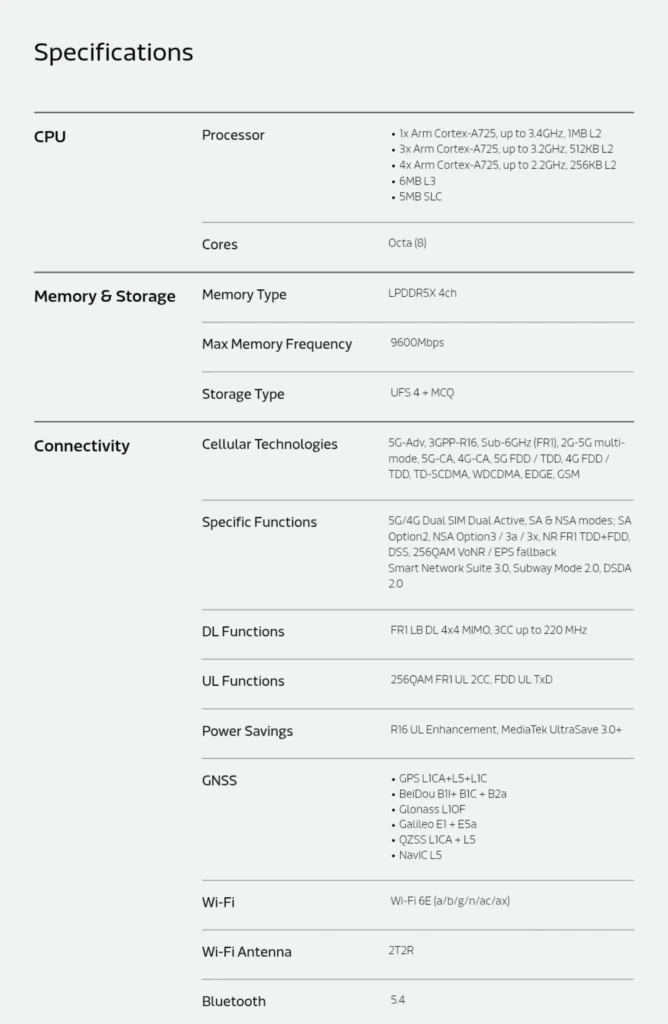
The MediaTek Dimensity 8550 takes a bold “All-Big-Core” approach to processing. By eliminating efficiency cores, the TSMC 4nm architecture uses a single Cortex-A725 prime core running at 3.4 GHz, supported by three performance cores at 3.2 GHz and four base cores at 2.2 GHz. This design results in no UI stuttering during heavy multitasking and high throughput for complex digital tasks.
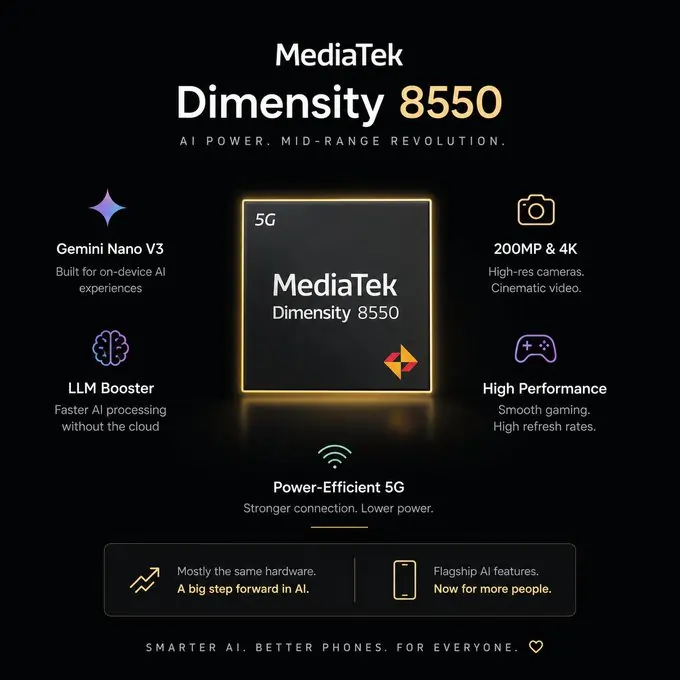
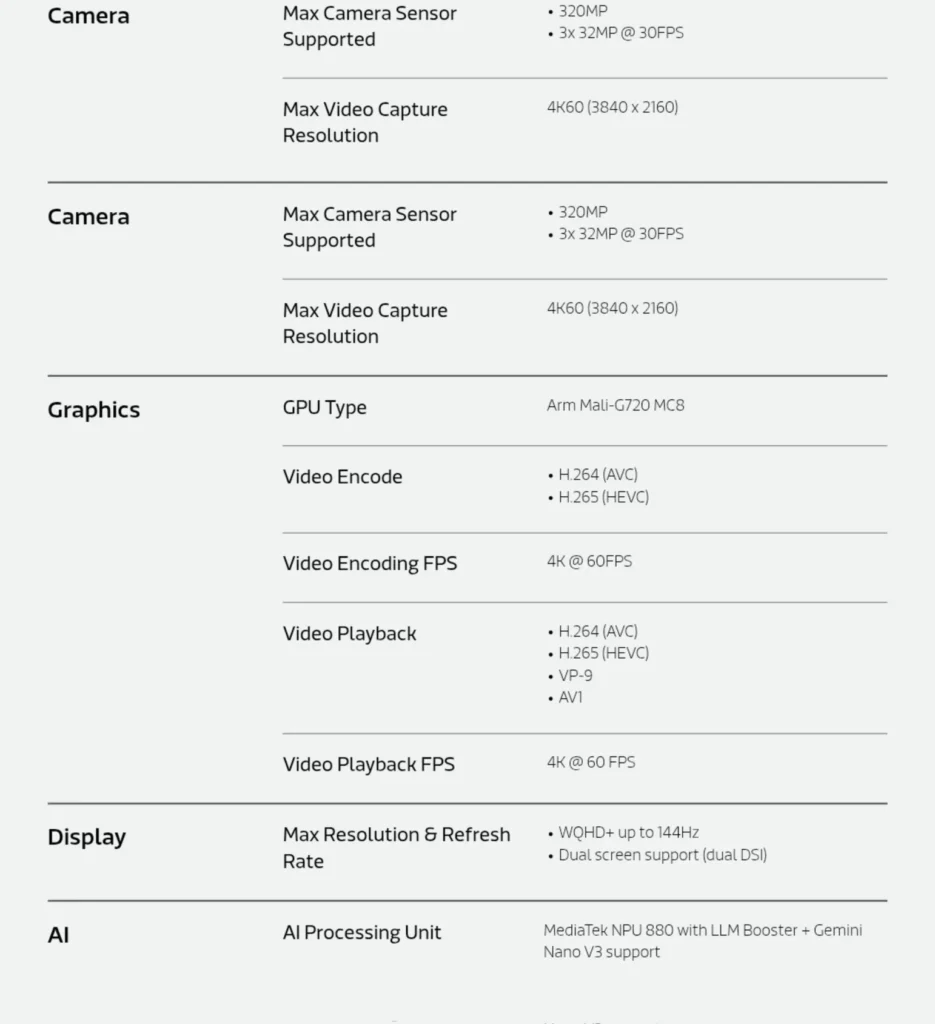
The biggest upgrade is in the NPU 880. MediaTek included specialized LLM Booster technology to handle Large Language Models natively. For consumers, this means the MediaTek Dimensity 8550 can run Google Gemini Nano V3 locally. On-device processing removes server latency, allowing for instant text summarization, live translation, and offline image generation.
Since the data never leaves the phone, user privacy stays secure. Google requires a strict 12GB RAM minimum for Gemini support, which means devices using this chip must pair it with fast memory. MediaTek addressed this by supporting LPDDR5X RAM speeds up to 9600 Mbps and UFS 4.0 storage, keeping the data pipeline wide open.
Gaming and visual workflows receive equal focus. The Arm Mali-G720 MC8 GPU offers hardware-accelerated ray tracing for realistic lighting in mobile games. Paired with 1440p display support at a 144Hz refresh rate, the visual UI remains very smooth even under heavy use. The chip also manages 4K HDR recording at 60fps and supports AV1 hardware decoding, greatly reducing battery drain during high-quality video streaming.
| MEDIA TEK DIMENSITY 8550 ARCHITECTURE |
|---|
| CPU: All-Big-Core (8x Cortex-A725) – 1x Prime Core @ 3.4 GHz – 3x Performance Cores @ 3.2 GHz – 4x Base Cores @ 2.2 GHz |
| NPU 880 (LLM Booster) > Native Google Gemini Nano V3 |
| GPU: Arm Mali-G720 MC8 (Hardware Ray Tracing) |
| MEMORY: LPDDR5X (9600 Mbps) | STORAGE: UFS 4.0 |
Connectivity uses a 3rd-Gen 5G-A Modem, reaching download speeds up to an impressive 5.17 Gbps. A unique “Subway Mode 2.0” feature ensures users can quickly reconnect to cellular networks when leaving dead zones, keeping cloud-synced apps updated. Local wireless connections benefit from Wi-Fi 6E tri-band support and Bluetooth 5.4, providing low-latency pairing with wireless audio devices.
To understand the MediaTek Dimensity 8550, it helps to look at its direct predecessor. This is not a complete redesign; it’s a targeted refresh of the Dimensity 8500. The CPU and GPU hardware remain the same. Consumers looking to upgrade for faster app launch times or higher gaming frame rates will not notice a difference.
The main change is in ecosystem integration. The previous version did not have the specialized LLM tuning needed for modern AI tasks. By enhancing the neural processing capabilities, the MediaTek Dimensity 8550 serves as a bridge to Google’s expanding AI ecosystem. It sets a hardware standard that guarantees developers can rely on local generative tools. Upcoming launch devices like the Honor 600 Pro will use this foundation to offer premium software features that were previously reserved for high-end flagship prices.
The Cost of the AI Ecosystem
Consumers do not purchase mobile chips directly; they buy the digital ecosystem enabled by the chip. The MediaTek Dimensity 8550 targets the premium mid-range market segment. This allows users to access flagship-level features without paying the high markup associated with top-tier smartphones.
Instead of a monthly cloud subscription for advanced AI tools, users make a one-time hardware payment. Since the AI runs locally through the NPU, there are no recurring costs for fast text processing or image generation. The strict 12GB RAM requirement will slightly increase the base price of these phones. However, the long-term digital value easily outweighs the upfront cost.
Shifting AI processing onto the device tackles latency issues, protects user privacy, and removes the need for costly cloud subscriptions. While the lack of CPU upgrades from the previous generation might seem disappointing on paper, the focused AI improvements make this a highly practical release. It makes advanced digital tools accessible to a much broader audience. For users seeking premium software experiences without breaking the bank, the integration of Gemini Nano V3 makes the MediaTek Dimensity 8550 a vital step forward.