
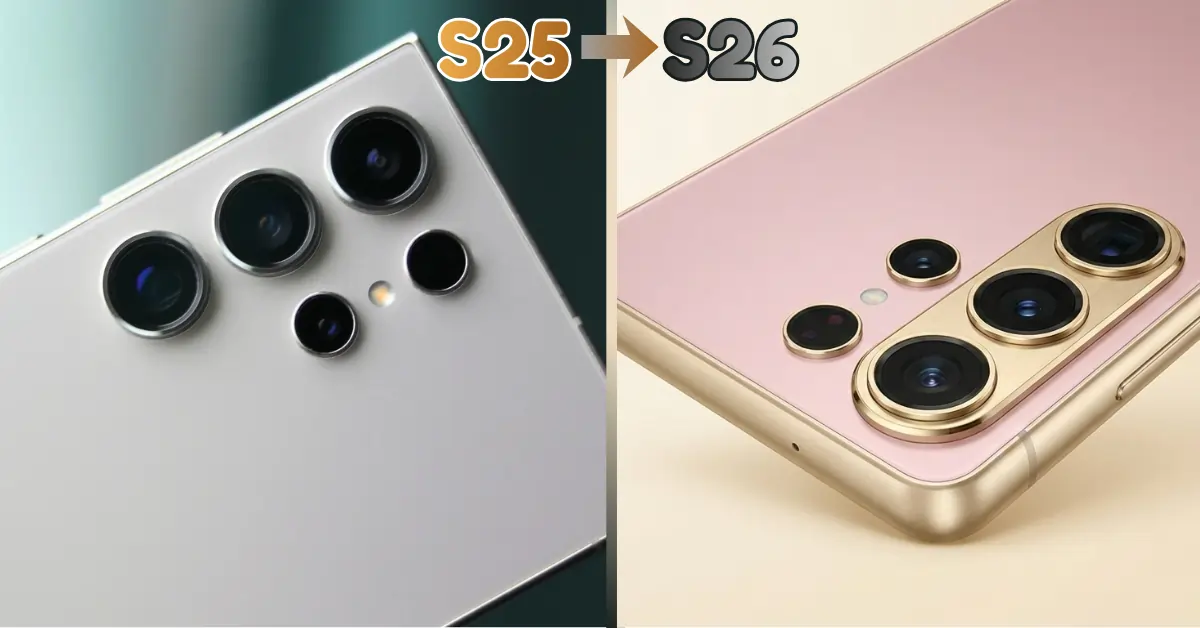
The rumor mill is spinning fast. Thanks to tipster Sanju Choudhary, we have our first real look at the Samsung Galaxy S26 Ultra. It looks like Samsung is planning a major pivot. We aren’t just seeing spec bumps. We are seeing a completely new design philosophy. The biggest shock? A potential switch from Titanium back to Aluminium. Let’s break down the data and see if this next-gen flagship is a true upgrade or a side-step.
The Display: M14 Takes the Lead
The screen has always been Samsung’s strong suit. The current Galaxy S25 Ultra uses an M13 panel. It is a great screen. It features an anti-reflective coating and decent brightness. But the Samsung Galaxy S26 Ultra aims to push this further.
The data points to a slightly larger 6.89-inch display using M14 technology. The big upgrade here is the jump to 10-bit color depth compared to the 8-bit panel on the S25 Ultra. This means smoother gradients and more life-like colors.

Another interesting addition is the “Privacy Display.” While details are scarce, this usually means a feature that blocks viewing angles from the side. This protects your data on crowded trains or buses. It also keeps the 3rd Gen Anti-reflective coating, ensuring the screen stays readable under harsh sunlight.
Performance: Speed and Power
Let’s talk engines. The Galaxy S25 Ultra runs on the Qualcomm Snapdragon 8 Elite. It’s a beast of a chip. It handles gaming and multitasking with ease. The memory speed sits at 9.6Gbps.
However, the Samsung Galaxy S26 Ultra is rumored to pack the “Qualcomm Snapdragon 8 Elite Gen 5.” This suggests a generational leap in processing power. The RAM speed also gets a boost to 10.7Gbps. Faster RAM means apps load quicker and the phone feels snappier.
The battery capacity remains the same at 5000mAh for both devices. But the charging speed finally gets a fix. The S25 Ultra is stuck at 45W wired and 15W wireless. The new model bumps this to 60W wired and 25W wireless charging. This is a much-needed improvement. Waiting for a flagship phone to charge in 2026 feels outdated. The 60W speed should cut downtime significantly.
Camera Systems: Letting in the Light
This is where the battle gets intense. The S25 Ultra has a solid setup: a 200MP HP2 main sensor with an f/1.7 aperture. It also has a 50MP 5x zoom and a smaller 10MP 3x zoom.
The Samsung Galaxy S26 Ultra changes the game with light capture. The main 200MP sensor now boasts a wider f/1.4 aperture. In photography, a lower f-number means a wider opening. This lets in way more light. Night shots will be cleaner. There will be less noise and blur.
The Zoom cameras are different, too. The S26 Ultra uses a 50MP sensor for the 5x periscope lens and keeps a 10MP sensor for the 3x zoom. However, the S26 Ultra also lists a 50MP ultrawide, matching the high-resolution trend. The focus here is clearly on low-light performance. That f/1.4 aperture is a hardware change that software can’t fake.
Design and Build: The Aluminium Controversy
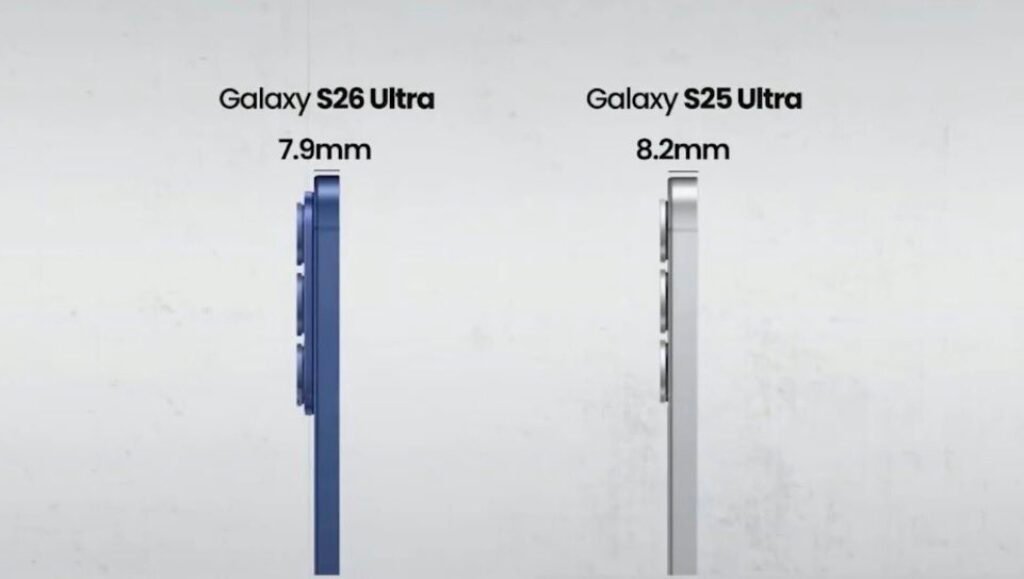
Here is the twist. The Galaxy S25 Ultra is known for its boxy frame and Titanium build. It feels premium and sturdy. It is 8.2mm thick and weighs 218g.
The Samsung Galaxy S26 Ultra seems to ditch Titanium. The input data lists the material as Aluminium. Why would they do that? Look at the dimensions. The new phone is thinner at 7.9mm and lighter at 214g.
It also moves to a “Rounded Frame.” The boxy corners of the S25 Ultra dug into palms. They were uncomfortable for some users. A rounded, thinner Aluminium frame makes the phone easier to hold. It might not sound as fancy as Titanium, but it might feel better in the hand.
Intaak Media Analysis: A Practical Pivot
We need to be honest about the Samsung Galaxy S26 Ultra. On paper, switching from Titanium to Aluminium looks like a downgrade. Marketing teams love Titanium. It sounds strong. It sounds expensive. But does it make a better phone? Not always.
The S25 Ultra was a bit of a brick. It was boxy and heavy. If Samsung uses high-grade Aluminium to shave off weight and thickness, that is a win for ergonomics. A phone you hold for five hours a day needs to be comfortable. The rounded corners confirm this theory. Samsung is prioritizing feel over buzzwords.
The real headline feature isn’t the metal. It is the f/1.4 aperture. That is a massive jump in optical capability. Most phones rely on AI to fix dark photos. Samsung is using bigger glass to fix the problem at the source. Combined with the 60W charging, which is finally competitive, the Samsung Galaxy S26 Ultra feels like a correction. It fixes the slow charging and the uncomfortable grip of the S25 Ultra.
This isn’t just a spec bump. It is a refinement. It shows Samsung is listening to complaints about ergonomics and charging speed. We will take a lighter, faster-charging phone over a heavy Titanium block any day.
(Via)