
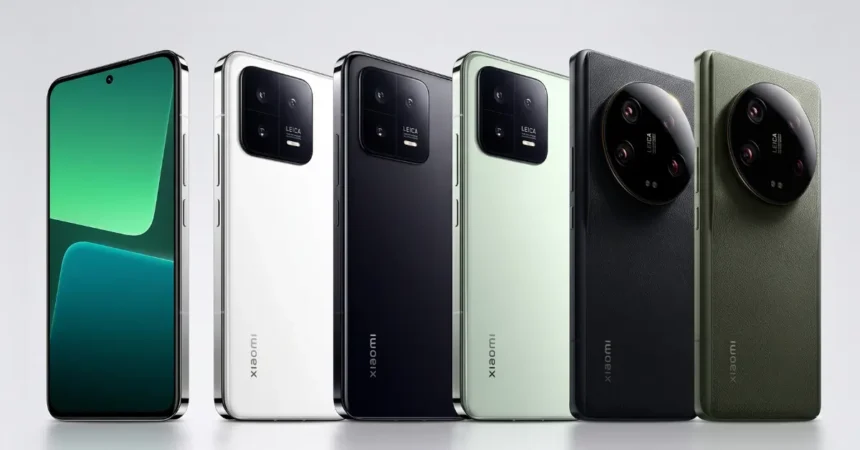
Xiaomi is now offering a battery swap for the Xiaomi 13 series, giving older models up to 541mAh of extra capacity for just 189 RMB. This program allows users to upgrade their smartphones without having to buy new ones. Improving the battery chemistry while keeping the same physical structure is a rare move that benefits consumers in an industry focused on constant upgrades. The Xiaomi 13 battery upgrade sets a new benchmark for support from original equipment manufacturers.
The Engineering Realities
The main engineering success here is built on modern high-density cell technology. Xiaomi replaces the original lithium-ion cells with denser ones that fit perfectly in the same physical casing. This means users get more screen time without adding thickness or weight to their devices. The increased battery capacity translates into longer use, helping users who rely on power-hungry applications.
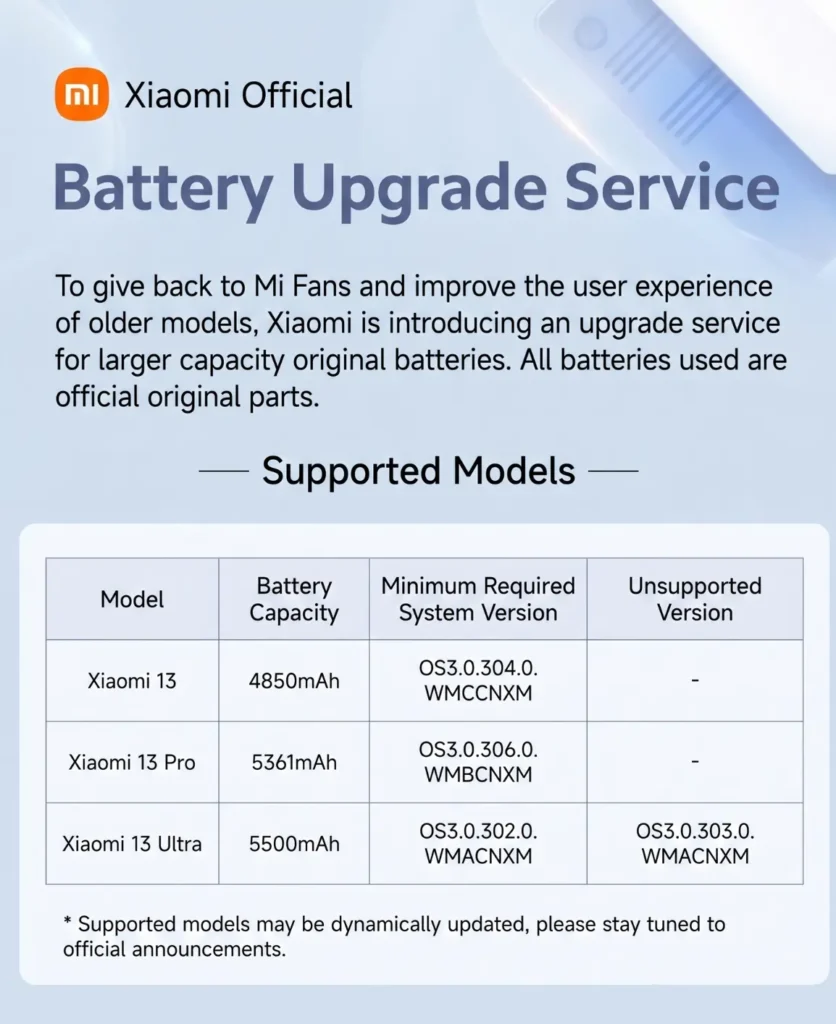
For the base model, the capacity goes from 4500mAh to 4850mAh, providing a solid 350mAh increase. The Xiaomi 13 Pro battery upgrade sees an even bigger jump, moving from 4820mAh to a strong 5361mAh. Meanwhile, the Xiaomi 13 Ultra battery upgrade raises the capacity from 5000mAh to a significant 5500mAh. Pairing these larger capacities with the efficient Snapdragon 8 Gen 2 processor ensures the devices compete well with modern models.
Cost and Rollout Logistics
In early May 2026, Xiaomi Group President Lu Weibing shared the pricing on Weibo. The Xiaomi 13 series official battery upgrade cost a flat 189 RMB, which is about $26 to $28 USD. This competitive pricing includes both the new high-density cells and the official labor costs at authorized service centers. It is rare to see first-party repair programs priced so favorably compared to third-party services.
Currently, the Xiaomi official battery replacement program operates fully in China. Users need to book their battery upgrade directly through the Xiaomi Mall app. Due to the limited supply of specialized cells, the digital queue system prevents authorized service centers from being overwhelmed. The tech community is watching closely to see if this regional rollout will expand internationally.
How to Upgrade Xiaomi 13 Battery Capacity: Essential Caveats
Upgrading a smartphone battery requires careful coordination between software and hardware. Users interested in how to upgrade Xiaomi 13 battery capacity must meet several technical requirements set by the manufacturer. The new battery has a different charging curve than the factory unit, so the smartphone firmware must be updated. Service centers will not approve the hardware installation unless the device runs the required operating system version.
After upgrading, users will go through a mandatory system recalibration. The smartphone may run warmer during the first few charging cycles. The internal power management system needs time to adjust and accurately reflect the new capacity. During this adjustment, background app syncing and cloud services may consume slightly more power.
Charging and Software Quirks
Another important detail involves the charging behavior when the battery is completely drained. If the Xiaomi high-capacity battery drops to zero percent, the device might stay dark when plugged in. It often needs 15 to 30 minutes of charging before the battery indicator lights up. Users should try to avoid letting the phone reach zero to prevent this delay.
Additionally, third-party battery health apps may struggle to read the new hardware accurately. Since the new cell does not match the original specifications, these apps may provide incorrect data. Xiaomi advises users to rely on the native operating system settings menu for accurate battery health monitoring. This ensures correct data tracking and avoids unnecessary consumer concern.
Basic physics shows that charging a larger cell will take more time. Users will notice that charging the device from zero to 100 percent takes longer than before. While the fast-charging protocols remain the same, the larger capacity simply requires more time on the charger.
Evaluating the Digital Strategy: Value vs. Obsolescence
In a broader context, the Xiaomi 13 battery upgrade challenges planned obsolescence. Many tech companies rely on declining battery performance to push customers to buy newer devices. By providing a low-cost official upgrade for older flagships, Xiaomi focuses on keeping users engaged for the long term. This strategy encourages users to stay within the brand ecosystem, increasing the likelihood they will invest in cloud storage, app subscriptions, and digital services.
Is the Xiaomi 13 battery upgrade a gimmick or a real value? The general consensus leans heavily toward value. Gaining 500mAh for under $30 fundamentally extends the life of the device by years. The temporary software recalibration and slightly slower charging times are small trade-offs for significantly improved daily performance.
Global Market Impact
The immediate question for international consumers is: Is the Xiaomi high-capacity battery upgrade available globally? As of now, Xiaomi has restricted the program to China. However, the success of this initiative might encourage other Android manufacturers to launch similar longevity programs. If the tech community responds positively, we might see global rollouts for future models becoming standard.
For now, this program marks a significant shift in how brands treat older hardware. Keeping users within a proprietary environment can be more profitable over time than pushing immediate hardware sales. The Xiaomi 13 battery upgrade shows that older smartphones have great potential if manufacturers provide adequate support. This initiative empowers consumers, offering a sustainable way to maintain their premium devices efficiently in today’s digital world.