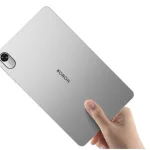

Released on April 30, 2026, the OnePlus Pad 4 starts at ₹59,999 in India. On paper, it seems like a powerhouse with a 13.2-inch 3.4K display and the fast Snapdragon 8 Elite Gen 5 chip. However, there is a noticeable difference between the base and top-tier models. Buyers should know what they are getting before making a pre-order.
Specs at a Glance
The Multi-Tasking Trap in the OnePlus Pad 4
The marketing heavily promotes the “Open Canvas 2.0” feature for easy multitasking. However, this is where a significant hardware limitation occurs. If you choose the base 8GB RAM variant, you can only run two free-flow windows at the same time.

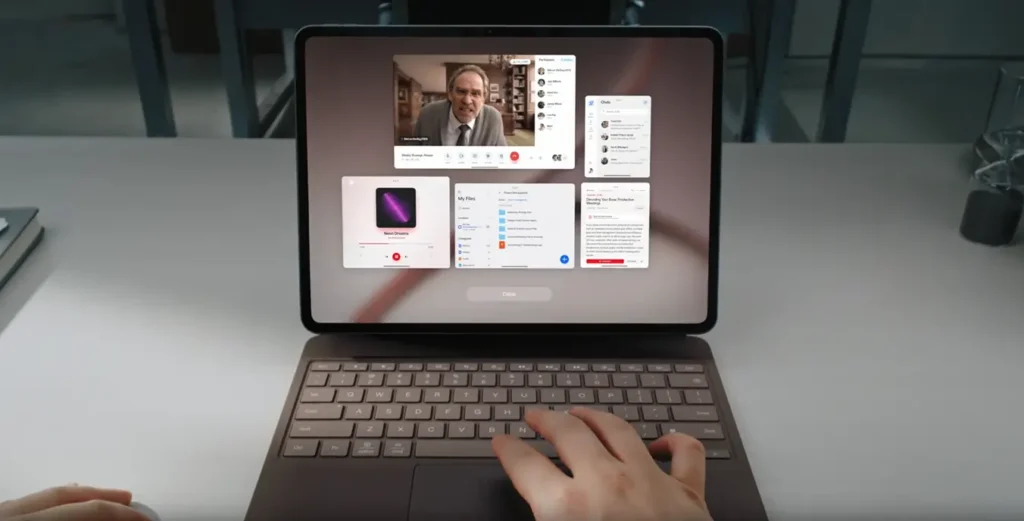
To access the advertised five-window experience, you need to buy the 12GB RAM model for ₹64,999. This doesn’t add up for power users who want to save money with the base option. It’s basically a software restriction aimed at convincing you to upgrade to the 512GB storage model. If you want to replace your laptop, the 8GB version is not a good choice.
Thermal Realities of the OnePlus Pad 4
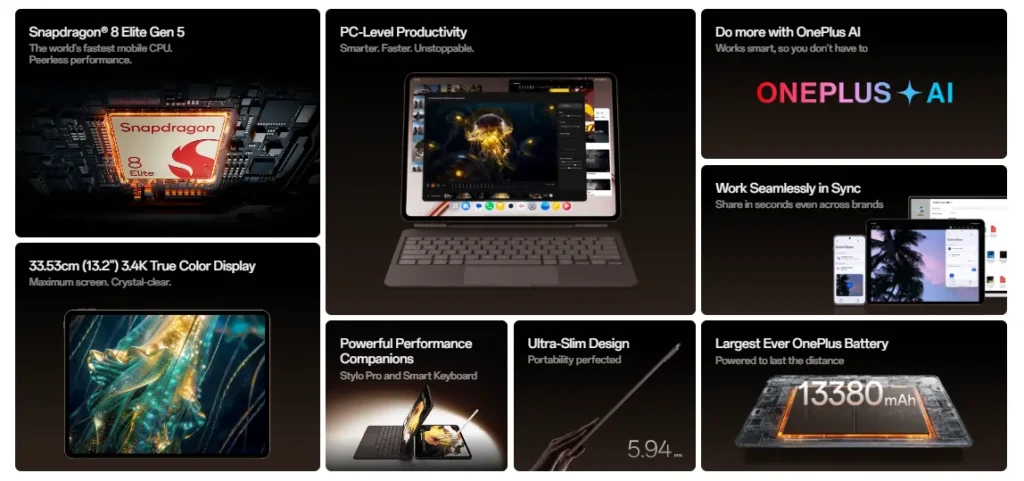
Historically, the Snapdragon 8 Elite Gen 5 runs quite hot in compact smartphones. Driving a large 3.4K display at a 144Hz refresh rate demands a lot of sustained power. The spec sheet shows a large 45,260mm² vapor cooling chamber inside the OnePlus Pad 4.
This indicates the OnePlus Pad 4 has enough space to cool effectively. Still, buyers should wait for real-world reviews to see if the AnTuTu score of 4.1 million remains consistent during two-hour gaming sessions. Thermal throttling is always a concern with such powerful chips, even in an ultra-slim metal body.
The Charging Math Doesn’t Lie
The battery capacity has increased to an impressive 13,380mAh, promising great daily use. However, the charging wattage remains at 80W SUPERVOOC. When you do the math, such a large battery takes significantly longer to charge at 80W compared to a phone.
Testing shows a full charge takes almost 1 hour and 45 minutes. Users accustomed to 30-minute charges for their smaller devices may find this very frustrating. You gain all-day screen time, but you lose quick charging speeds.
Display Logic and The Accessory Reality
The spec sheet mentions a “True Color” LCD instead of an OLED panel. Buyers might think “LCD” is a downside. However, the stated DeltaE of 0.7 reflects professional-level color accuracy right from the start.
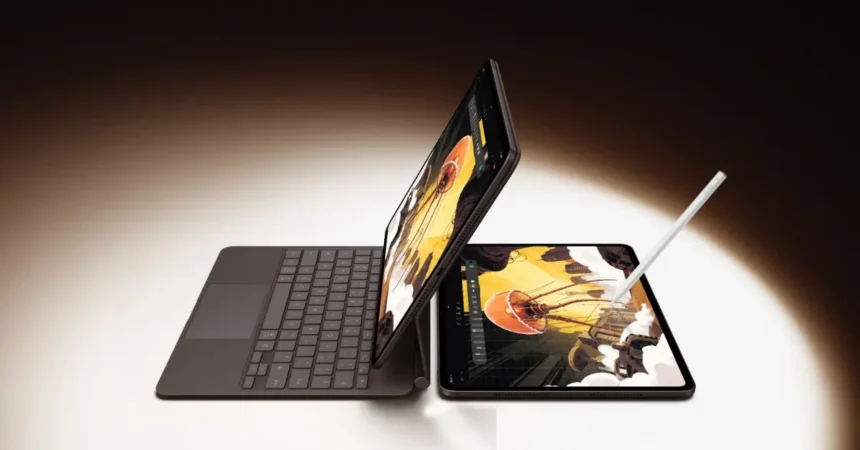
This means the OnePlus Pad 4 is aimed at digital artists and photographers needing true-to-life color reproduction. The newly redesigned Stylo Pro supports this purpose with its 16,000 pressure levels and a high-friction writing tip that mimics real paper. At least the new “Find My Stylo” feature helps you keep track of this pricey accessory.
The Predecessor Legacy & Market Gap
The previous model, the Pad 3, came with a smaller 12,140mAh battery and a 12.1-inch screen. This new model resolves the screen size issue for serious creators, moving solidly into laptop-replacement territory. The 7:5 ReadFit ratio also makes vertical document editing easier than standard 16:10 screens.
| Feature | OnePlus Pad 4 | Samsung Tab S11 | iPad Air 11 (M4) |
|---|---|---|---|
| Base Price | ₹59,999 | ~₹70,368 | ₹64,900 |
| Base Storage | 256GB | 128GB | 128GB |
| Refresh Rate | 144Hz | 120Hz | 60Hz |
| Battery Size | 13,380mAh | 8,400mAh | ~7,819mAh |
| Charger | Included (80W) | Sold Separately | Included (30W) |
Compared with the Samsung Galaxy Tab S11, the differences in intent are clear. Samsung has an OLED screen but pairs it with a small 8,400mAh battery and slower 45W charging. Meanwhile, the Apple iPad Air 11 M4 is outdated with a 60Hz display. OnePlus chose battery life and smooth refresh rates over perfect black levels.
The “Fine Print” Warning
Buyers should be aware of the limitations of accessories and AI features. The new OxygenOS 16 AI Writer and AI Painter tools require significant memory bandwidth. These features will likely run much better on the 12GB variant.
Additionally, the much-discussed Stylo Pro and Smart Keyboard are sold separately. Adding those costs raises the final price well over ₹75,000. Don’t assume that the base package provides the complete advertised experience.
Pros:
Cons:
The Final Buying Verdict
If you are a digital artist or a heavy spreadsheet user, the 12GB RAM variant is the only smart option. The base model’s multitasking limits make it a poor choice for professionals who want to replicate a desktop workflow. Casual users looking for a media screen should consider cheaper alternatives.
Wait for real-world thermal tests before buying the base model. If you need advanced multitasking and strong battery life, skip the base option and pre-order the 12GB version of the OnePlus Pad 4.
Technical Disclosure
“This analysis is based on official hardware specifications, internal cooling documentation, and comparative performance data of the Snapdragon 8 Elite Gen 5 chipset. While this is not a hands-on review, our ‘Deep Technical Preview’ methodology uses architectural math and market benchmarking to provide a more accurate buying guide than a standard spec-sheet summary.”