
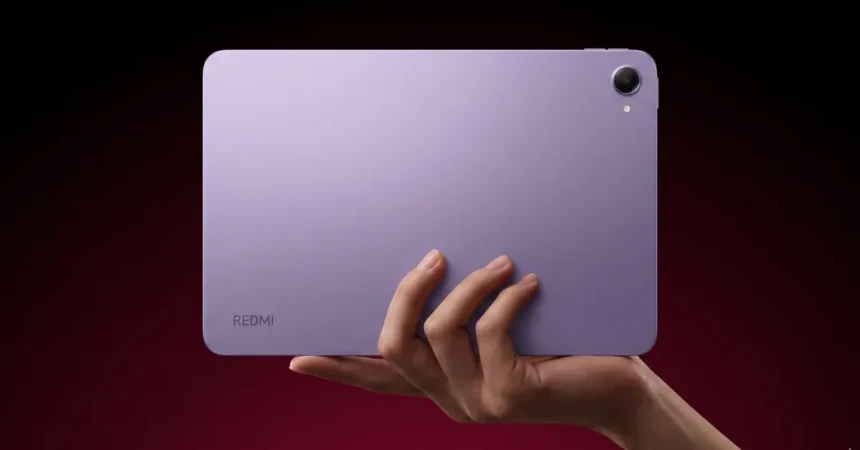
The Redmi K Pad 2 is shaping up to be one of the most interesting launches in the compact tablet space this year. According to details shared by tipster Tech Home, this device is set to debut in China later this April alongside the Redmi K90 series. But this is not just another spec upgrade story. If we look at the current market, brands are clearly splitting tablets into two lanes: big-screen productivity machines and compact gaming-focused devices. Xiaomi seems to be doubling down on that second category.
Positioning it as a direct successor to the original Redmi K Pad, the Redmi K Pad 2 signals a shift toward serious gaming hardware in a smaller form factor. The predecessor launched around ₹33,000 in China, and with these upgrades, a price bump feels almost certain. That tells us something important—compact tablets are no longer budget-friendly experiments. They’re becoming premium niche devices for gamers who want portability without compromise.
Redmi K Pad 2: Performance-First Approach with Dimensity 9500
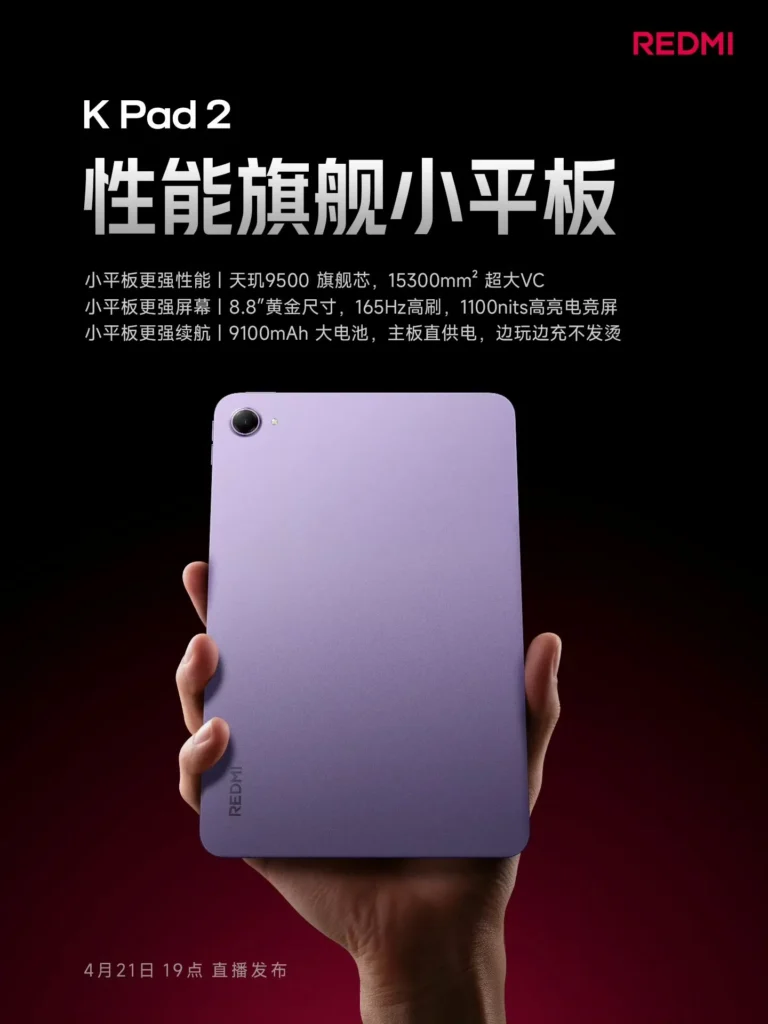
The Redmi K Pad 2 runs on the MediaTek Dimensity 9500 chipset. This is a flagship-level processor, and that decision alone changes the entire conversation. Xiaomi is not targeting casual users here. This is clearly aimed at gamers and power users who demand sustained performance.

Back to the device, the thermal setup. A massive 15300mm² vapor chamber cooling system is included. Compared to the predecessor’s already impressive cooling, this is a noticeable jump. In real-world terms, this means longer gaming sessions without thermal throttling. If you’ve ever played heavy titles like BGMI or Genshin Impact on a compact device, you know how crucial that is.
Battery life also gets a major upgrade. The jump from 7500mAh to a 9100mAh battery is significant, especially for an 8.8-inch tablet. Combine that with bypass charging, and you’re looking at a device that can run games directly off power without heating the battery. That’s a feature usually seen in gaming phones, now entering tablets.
Display and Gaming Features
The display on the Redmi K Pad 2 sticks to an 8.8-inch size but enhances the experience where it matters. A 165Hz refresh rate remains, but brightness climbs to 1100 nits. That’s a big deal for outdoor use and visibility. It’s still an LCD panel, which might disappoint some, but for gaming, LCD often provides better durability and lower burn-in risk.
What really stands out is the touch and motion response system. A 540Hz multi-finger touch sampling rate and 400Hz gyroscope sampling rate make this tablet extremely responsive. For competitive gamers, these numbers translate into faster reaction times. It’s subtle, but in fast-paced games, every millisecond counts.
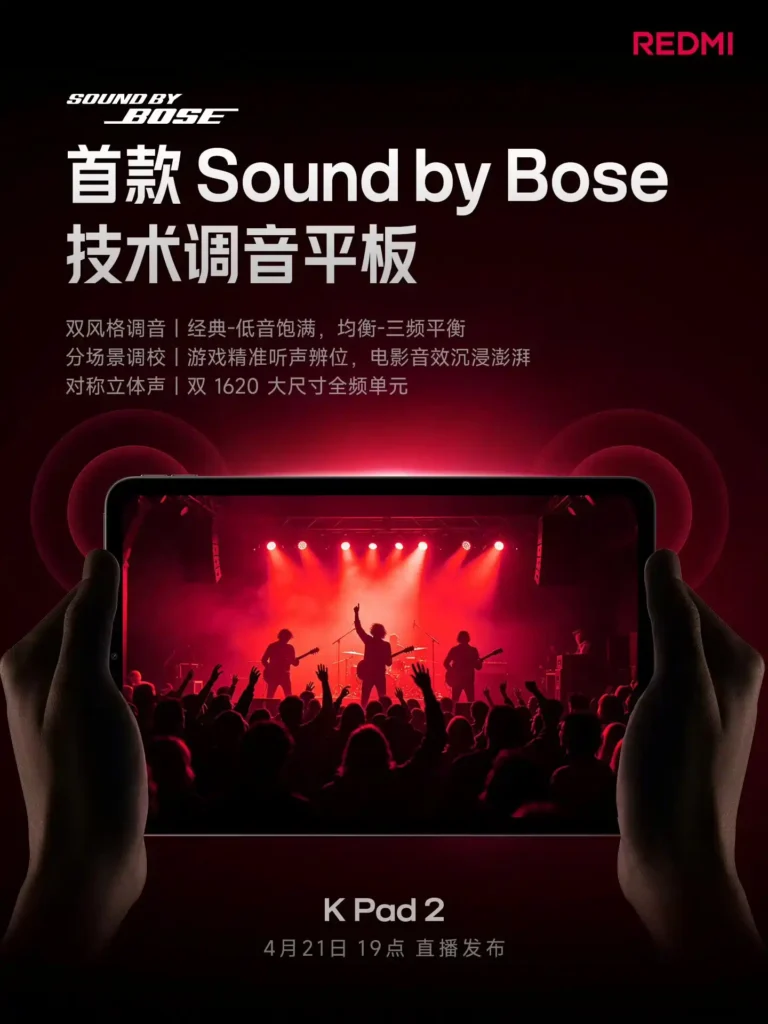
Sound also gets attention here. Dual symmetrical speakers tuned by Bose suggest Xiaomi is focusing on immersion. Audio matters more than people think in gaming. Directional sound can give you an edge, especially in shooter titles.
A Different Strategy for a Different User
Now shift focus to the Redmi Pad 2 Pro. This device plays in a completely different segment. While the Redmi K Pad 2 targets gamers, the Pad 2 Pro is clearly built for productivity and entertainment.
The display is much larger at 12.1 inches with a 2.5 much larger at 12.1 inches with a 2.5K resolution and 120Hz refresh rate. That makes it ideal for streaming, reading, and multitasking. The 12,000mAh battery pushes endurance even further, making it a better fit for long work sessions or binge-watching.
If we compare both, the strategy becomes clear. Xiaomi is segmenting its tablet lineup instead of building a single device for everyone. The Pad 2 Pro is for students, professionals, and casual users. The Redmi K Pad 2 is for gamers who want raw performance in a compact form.
How Redmi K Pad 2 Improves Over Its Predecessor
The Redmi K Pad upgrades feel meaningful rather than incremental. The chipset jump alone from Dimensity 9400+ to 9500 suggests a clear performance leap. The battery increase is also practical, not just marketing.
Display brightness is improved, cooling is enhanced, and gaming-specific features are more refined. Even audio tuning seems more focused this time. These are not cosmetic changes. They directly impact user experience.
If we look at pricing trends, though, this raises a question. Is Xiaomi slowly pushing this lineup into premium territory? It seems likely. The hardware justifies it, but it narrows the audience slightly.
Should You Wait for Redmi K Pad 2?
If you value performance above all else, the Redmi K Pad 2 looks like a solid option. It is targeting buyers who want a compact device that can handle high-end gaming without compromise. That’s a very specific audience, but for them, this could be one of the best options in 2026.
On the other hand, if your usage is more about streaming, studying, or multitasking, the Redmi Pad 2 Pro makes more sense. Bigger screen. Bigger battery. More versatile.
Redmi K Pad 2 Specs At Glance (Rumor)
Right now, the bigger question is global availability. There is no confirmed timeline yet, and that could be a dealbreaker for many. Still, if Xiaomi brings this device internationally, it could redefine what we expect from compact tablets.
At its core, this is not just another tablet launch. It’s Xiaomi testing how far the Redmi K Pad 2 can push the boundaries of portable gaming hardware.
(Via)